
Overview
A process engineer is asked to spec a replacement transmitter for a refinery unit and discovers the control system it reports into has been running, in one upgraded form or another, since before they were born. That is not an unusual finding on a Honeywell-based site. Honeywell Process Solutions built its reputation on distributed control systems designed to be modernised in place rather than ripped out, and a lot of UK and global process plant still reflects that design philosophy decades on.
Honeywell Process Solutions the industrial automation arm of Honeywell International covers field instrumentation, distributed control, safety systems and plant historian software for the process industries: oil and gas, refining, chemicals, power and life sciences among them. Its Experion PKS platform and SmartLine instrumentation range sit at the centre of a large and still-expanding installed base.
This guide covers how Honeywell's process automation portfolio developed, what the current range spans field to control room, and the checks worth making before you order equipment into an existing Honeywell-based system, or specify it fresh.
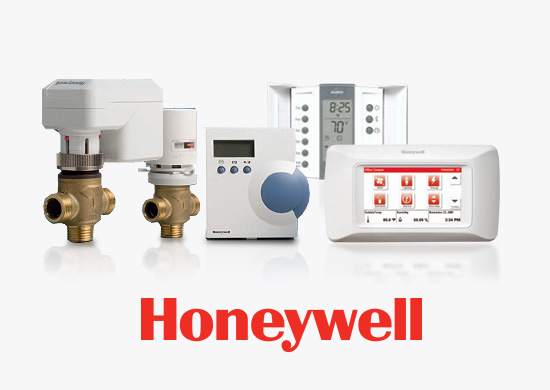
Fig. 1 A cross-section of the Honeywell range covered in this guide field instrumentation and control hardware.
From the first distributed control system to Experion PKS
Honeywell entered process control decades before "distributed control system" was an established category, and in 1975 launched the TDC 2000 widely credited as the first commercially available DCS, a genuine step change from the panel-mounted analogue controllers it replaced. The TDC 3000, a significant advance on that original platform, followed in the mid-1980s and became one of the most widely deployed control systems in the process industries worldwide.
Honeywell launched Experion PKS (Process Knowledge System) in 2003 as the successor platform, built on open, standards-based architecture rather than the proprietary networking of the TDC generation. Critically, Honeywell built a software migration path Experion Local Control Network (ELCN) that lets a site modernise a TDC 3000 or TPS (TotalPlant Solution) installation onto Experion incrementally, protecting the engineering and process knowledge already built into the older system rather than forcing a wholesale replacement. That migration path is a large part of why so many older Honeywell control rooms are still in active service today, in upgraded form.
The Honeywell Process Solutions portfolio, field to control room
"Honeywell Process Solutions" is not one product. Like other major automation suppliers, it is a layered portfolio, and each layer does a different job.
| Layer | Honeywell product family | What it does |
|---|---|---|
| Field instrumentation | SmartLine ST 700 & STT transmitters | Pressure, differential pressure and temperature measurement feeding the control system. |
| Control system | Experion PKS | Distributed control coordinating I/O, sequencing and control loops across the unit or site. |
| Legacy control system | TDC 3000 / TPS | Earlier-generation Honeywell DCS still running on many sites, with a defined migration path onto Experion. |
| Safety | Safety Manager | Independent safety instrumented functions layered over the process control system. |
| Wireless field devices | OneWireless | Wireless field instrumentation and networking for points where hard-wiring is impractical or uneconomic. |
| Historian & software | Uniformance PHD | Plant-wide process history database, used for trending, reporting and performance analysis. |
Table 1 The Honeywell Process Solutions stack by layer. Exact product names and options vary by industry and generation; confirm the current designation for your application before specifying.
Why UK process sites keep running Honeywell
A few practical reasons come up repeatedly among UK sites still specifying or extending Honeywell systems.
- A defined upgrade path for legacy systems. The ELCN migration route means a site running TDC 3000 or TPS can move onto Experion incrementally, without a disruptive full replacement of a working control philosophy.
- Deep installed base in oil, gas and refining. Decades of deployment across process-heavy industries mean parts, engineering expertise and third-party support are all readily available in the UK, not routed through a single overseas channel.
- HART-based SmartLine instrumentation that integrates cleanly with Experion or a legacy TDC/TPS system alike, simplifying like-for-like field device replacement.
- Wireless options through OneWireless for monitoring points that were never economic to hard-wire, added onto an existing system rather than requiring a separate network.
- A single software layer for plant history. Uniformance PHD gives operations and engineering teams one place to pull trend and performance data from, rather than a patchwork of spreadsheets and local logs.
The counterfeit and grey-market instrumentation problem
Field instrumentation that is widely specified and individually high in value is exactly the kind of part that attracts convincing copies, relabelled stock and units of unclear origin, and Honeywell's SmartLine range is no exception. The risk is worse than it first appears because a plant typically trusts the reading a transmitter produces without questioning the hardware behind it.
- Unknown or undocumented calibration
- A SmartLine transmitter is only as good as the traceable calibration behind it. Without genuine paperwork matched to the serial number, what you have is a plausible reading rather than a defensible measurement.
- No genuine warranty or software licensing
- Experion PKS and Uniformance licensing both depend on the underlying hardware and software being genuine. A misrepresented unit can look identical until an activation or support request exposes the gap.
- Missing or fabricated safety and hazardous-area certification
- A SIL rating or ATEX/IECEx marking printed on a label is not, by itself, proof of anything. On a Safety Manager loop or a hazardous-area installation, that gap sits inside your safety case, not the seller's.
Verifying Honeywell equipment before you order
- Cross-check the full model and option string against both the nameplate and any accompanying documentation, not just the headline product name.
- Ask for the serial number and, where the channel allows it, verify it through Honeywell or an authorised distributor rather than taking a seller's word for its origin.
- Treat pricing that undercuts every legitimate supplier by an implausible margin as a warning rather than a bargain, particularly on legacy TDC 3000/TPS hardware where genuine stock is naturally scarce.
- Ask who actually held the stock, and for how long. An unclear chain of custody is itself a risk factor, independent of whether the part turns out to be genuine.
- Ask for photographs of the physical item nameplate, wiring compartment, module faceplate rather than accepting a generic catalogue image.
A convincing nameplate proves nothing on its own. Only traceable calibration or certification paperwork, matched to the serial number in front of you, tells you what the part actually is. If a seller cannot produce that, treat the listing as unverified.
Checks before you order
Whoever you buy from, including us, these are worth working through before the order goes in.
- Confirm the exact model and option string, not just the product family a generic "Honeywell transmitter" description is not enough to quote against.
- Confirm firmware and Experion (or TPS) version compatibility before adding hardware to an existing system, since mismatched versions are a common source of integration delays.
- Confirm the process connection and communication protocol against your existing installation.
- Confirm the hazardous area zone and any SIL rating required up front, not after the order is placed.
- Ask for calibration or certification traceability as a condition of the order.
- Confirm software licensing for Experion, Safety Manager or Uniformance components is often a separate line item from the hardware itself.
- Get the warranty and returns position in writing, including what happens if a unit does not perform correctly on site.
- Confirm a realistic delivery date to site, not a generic dispatch estimate, especially on legacy hardware where availability can change quickly.
How British Instruments can help
British Instruments is a trusted UK and US supplier of genuine Honeywell Process Solutions equipment, from current SmartLine instrumentation through to spares for sites still running TDC 3000 or TPS. Most inquiries we receive are not a single part number in isolation; they come from a maintenance or engineering team working out whether a like-for-like replacement or a step onto Experion makes more sense for their specific installation, and we would rather have that conversation honestly before anything is quoted.

We supply across the Honeywell Process Solutions range SmartLine ST 700 and STT transmitters, Experion PKS hardware, Safety Manager components, and legacy TDC 3000/TPS spares for sites not yet ready to migrate. Send us the model or tag number from the unit you are replacing, or a photograph of the nameplate if you are not sure what you are looking at, and we will confirm the exact variant, verify what is being offered against it, and come back with availability and a realistic delivery date before anything is priced.
Ready to Source Genuine Honeywell Products?
Get competitive pricing, fast delivery in the UK (EU) & US, and dedicated technical support on every order. Reach out now and receive a tailored quote within 24 hours.
Frequently asked questions
TDC 3000 was Honeywell's control system through the 1980s and 1990s. TPS (TotalPlant Solution) extended that platform with additional networking and integration capability. Experion PKS, launched in 2003, is the current open-architecture platform and successor to both. Honeywell's ELCN migration path allows a TDC 3000 or TPS installation to move onto Experion incrementally rather than through a full replacement.
TDC 3000 and TPS are legacy platforms, so any stock available now is existing channel inventory rather than new production. Genuine units can still be sourced, but availability narrows over time and verifying authenticity matters more on legacy hardware than on current production. We can help source verified stock while you plan a migration timeline.
Experion PKS is a distributed control system (DCS), built to coordinate I/O, sequencing and control loops across an entire process unit or site, with the redundancy, historian integration and safety-system interfacing a DCS is expected to provide. It is not a PLC, though PLCs and skid controllers are commonly integrated into an Experion architecture at the equipment level.
No. SmartLine transmitters communicate over HART and can be digitally integrated with either Experion PKS or a legacy TDC 3000/TPS system, and will also function on a control system from another manufacturer using standard HART or 4-20mA signalling.
OneWireless is Honeywell's wireless field instrumentation network, used for monitoring points that are impractical or uneconomic to hard-wire back to the control system. It is typically added onto an existing Experion or legacy architecture rather than replacing wired instrumentation on critical control loops.
Cross-check the full model and option string against the nameplate and any documentation, verify the serial number through Honeywell or an authorised distributor where possible, and treat pricing that undercuts the market by an implausible margin as a warning rather than a bargain. We verify what we supply before quoting rather than after a purchase order is raised.
The model or tag number from the nameplate, and a description of what it is replacing or which system it will integrate with. If you are not sure exactly what you have, a clear photograph of the nameplate is usually enough for us to identify it correctly.
Tell us what's already on site.
Send us the equipment you are replacing or extending, SmartLine, Experion or legacy TDC/TPS hardware. We will confirm what fits your existing Honeywell system and come back with availability and a realistic delivery date.